As industries intensify their focus on energy efficiency, operational safety and decarbonization, thermal insulation is increasingly moving from a passive protective layer to a strategic energy-management intervention. Heat losses from valves, flanges, pipelines, turbines, exhaust systems and other process equipment can translate into higher fuel and steam consumption, elevated surface temperatures and avoidable operating costs.
The challenge, therefore, is not merely to insulate equipment, but to engineer insulation systems around actual operating conditions and measurable performance.
This is the space Pentas Insulations is addressing. Rather than approaching insulation as a standard product category, the company combines thermal engineering, R&D, laboratory capabilities and application-specific design to develop solutions aimed at reducing heat loss while retaining accessibility for inspection and maintenance.
From Insulation Products to Thermal Engineering Solutions
Pentas Insulations has built its proposition around solving real industrial heat-management challenges through practical and energy-efficient solutions. Its approach begins with understanding the thermal behaviour of an application instead of simply selecting an insulation material and applying a standard thickness.
A key part of this approach is the company's focus on R&D and its understanding of the critical radius of insulation concept. By examining the relationship between insulation thickness, thermal conductivity, surface area and heat transfer, Pentas seeks to determine configurations that deliver meaningful thermal performance under actual plant conditions. This engineering-led approach has helped the company develop customized solutions for demanding industrial applications.
Among its notable developments are its patented Innovative Energy-Saving Removable Thermal Insulation Jackets. Designed for equipment that requires periodic inspection, maintenance or replacement, these jackets can be removed and reinstalled without the repeated dismantling and rebuilding associated with conventional insulation. They are applicable across valves, flanges, pipelines, turbines, engines, exhaust systems, pumps and other process equipment.
Making Energy Savings Measurable
The company's differentiation becomes particularly relevant where insulation performance has a direct relationship with energy consumption. According to Pentas, its interventions in certain industrial applications have contributed to reductions in the steam-to-production ratio of up to 50 percent, while some projects have achieved payback periods of around 8–12 months, depending on the application and operating conditions.
The economic proposition is strengthened by durability. Under suitable operating and maintenance conditions, Pentas states that its insulation jackets can provide an approximate service life of eight to ten years. This creates the potential for customers to continue realizing energy savings well beyond the initial payback period.
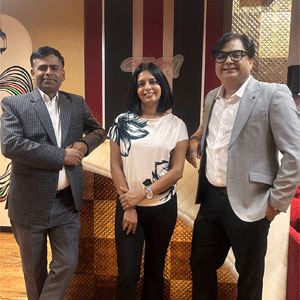
“The impact also extends to sustainability. By reducing heat loss and the associated requirement for steam and fuel, effective insulation can help industrial facilities lower energy consumption and associated greenhouse-gas emissions. Pentas therefore positions thermal insulation as part of a broader energy-efficiency strategy rather than an isolated maintenance purchase”, speaks Dr. SandipKumar Sonawane, Technical Director.
Its capabilities extend across hot and cold applications and include customized solutions for sectors such as tyre and rubber manufacturing, pharmaceuticals, automotive, engineering and process industries. Its customer exposure includes organizations such as CEAT, CEAT Sri Lanka, Bridgestone, DSI Tyres, Continental, Lupin, Ipca, JK Tyres, Graphite India , L&T, HAL, Mahindra & Mahindra and others. Pentas Insulations is also contributing to India’s Atmanirbhar Bharat initiative by developing indigenous thermal insulation solutions for the defense sector, supporting the nation’s drive towards self-reliance, technological advancement, and reduced dependence on imported technologies.
Designing Around the Application
For Pentas, customization starts before manufacturing. The company studies equipment geometry, operating and surface temperatures, ambient conditions, existing insulation, heat-loss areas, accessibility, maintenance frequency, space limitations, safety requirements and expected service life before determining the appropriate insulation configuration.
This application-first philosophy is particularly important for complex industrial equipment, where two assets operating at comparable temperatures may have completely different geometries and maintenance requirements. Material selection is similarly driven by the operating environment, with factors such as temperature resistance, thermal performance, chemical and moisture resistance, flexibility, mechanical strength and durability considered during solution development.
For removable jackets, precision in measurement, fitment, stitching and finishing is equally important. Gaps, compression and improper installation can compromise thermal performance, making manufacturing consistency an integral part of the overall engineering solution.
“Pentas complements these capabilities through its sister concern, Sun Consultancy, which brings an additional industrial energy-efficiency and consultancy perspective. Together, the two entities can connect thermal-loss identification with practical insulation interventions, creating a more integrated approach to industrial energy conservation”, shares CA Anand Bang, Finance Director.
Building the Next Layer of Thermal Intelligence
The next phase of Pentas Insulations' journey is focused on expanding from an insulation product manufacturer into a broader industrial thermal-management and energy-efficiency solutions company. The company plans to strengthen its thermal-assessment capabilities, expand its product portfolio and deepen its presence across industries and geographies while continuing to invest in R&D for high-temperature and technically challenging applications. The next phase of Pentas Insulations' journey is focused on expanding from an insulation product manufacturer into a broader industrial thermal-management and energy-efficiency solutions company
“A particularly forward-looking initiative is the development of a proprietary data layer around its installations. Pentas envisions creating a structured Pentas Energy Dataset, capturing application-level information that can strengthen thermal assessments, support more informed solution development and build deeper technical knowledge across installations”, informs Ashwini Bolinjkar, Marketing Director.
This ambition reflects a larger shift in how industrial insulation can create value. For Pentas, the objective is not simply to manufacture insulation that performs to specification, but to understand where energy is being lost, engineer a practical intervention, measure its impact and continue improving the solution over its operating life.
With its combination of patented removable technology, application-specific engineering, R&D and energy-efficiency expertise, Pentas Insulations is positioning thermal insulation as a measurable component of industrial performance - helping customers address today's energy costs while building toward more efficient and sustainable operations.






We use cookies to ensure you get the best experience on our website. Read more...