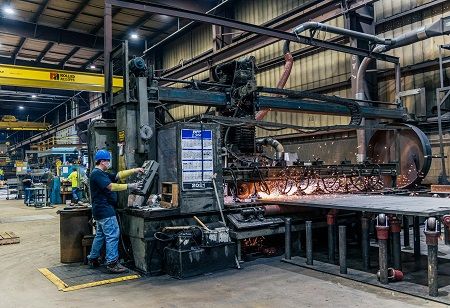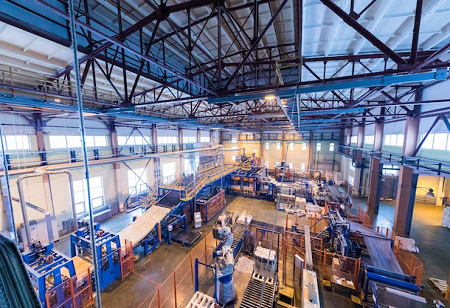
The Union Budget 2026 has placed manufacturing at the center of growth narrative in India and this is an indication that the country has a massive drive towards becoming an industrial hub globally.
The government has been very strategic in rolling out initiatives such as the India Semiconductor Mission 2.0, has provided a huge sum of Rs 40,000 Cr to stimulate production, and in supporting MSMEs, nuclear power, and aircraft components.
The measures will support the local supply chains, improve the use of technology, and generate new employment in the manufacturing ecosystem.
Here’s what industry leaders have to say about these game-changing moves.
Veejay Ram Nakra, Chairman, FICCI Committee on Agriculture and President, Farm Equipment Business, Mahindra & Mahindra:
“Union Budget 2026 is an inclusive budget that ensures continuity of structural reforms and long-term stability and growth. In line with Vikshit Bharat 2047, it supports rural economic growth through the emphasis on high-value crops, promotion of allied sectors like animal husbandry, textiles, and tourism, while furthering rural infrastructure and technology support. Initiatives like Bharat Vistar, skill development, She Marts, and girls’ hostels in every taluka are meaningful steps to enable wider participation in India’s economic growth. Scaling manufacturing and introducing ISM 2.0 reinforces India’s AtmaNirbhar manufacturing ambitions.”
Rinkesh Roy, Joint Managing Director and CEO, JSW Infrastructure:
“We congratulate the Honourable Finance Minister and the Government of India on a decisive and forward-looking Budget that firmly positions infrastructure as the foundation of India’s growth. The push for port modernization, inland waterways, coastal shipping, and logistics corridors will enhance India’s competitiveness and marks a structural change. The focus on expanding national waterways, strengthening east coast connectivity, container manufacturing, and digitalizing ports aligns closely with our vision of building integrated, port-led logistics ecosystems. Green ports, sustainability-linked financing, ship repair, and smart-port technologies will elevate India’s maritime competitiveness.”
Also Read: Engineering Leadership Across India's Mining & Infra Value Chain
Sanjay Gandhi, Group CFO, Pearl Global Industries:
“The Union Budget 2026 outlines a comprehensive approach to strengthening India’s textile ecosystem, focusing on infrastructure development, capital access, and skill augmentation. Initiatives like SAMARTH 2.0 signal a renewed push towards industry-aligned skilling, while the focus on self-reliance in natural, man-made, and new-age fibers is a positive step toward long-term raw material security. The emphasis on technical textile capabilities is significant as the sector moves up the value chain. The impact will depend on timely execution and detailed guidelines to help the textile industry compete globally with manufacturing hubs like Vietnam and Bangladesh.”
Pradeep Aggarwal, Founder & Chairman, Signature Global (India):
“The Union Budget 2026 provides a strong and credible roadmap for India’s next growth phase, focusing on infrastructure, urban development, and financial reforms. The decision to increase public capital expenditure to Rs 12.2 lakh crore in FY27, a 9% rise over FY26, will play a critical role in accelerating project execution and attracting private investment. This increased funding will boost infrastructure development, especially in urban areas, and improve the ease of doing business. The clear focus on modernizing cities and expanding infrastructure will be a major driver of long-term economic growth.”
Satish Kumar Agarwal, Chairman and Managing Director, Kamdhenu Group:
“The Rs 12.2 lakh crore capital expenditure outlay with a targeted push for high-speed rail and road corridors, waterways, and city economic regions highlights a sustained push for infrastructure-led growth. The focus on infrastructure development in tier-2 and tier-3 cities with populations over 5 lakh will further fuel the growth momentum. The proposed Infrastructure Risk Guarantee Fund will effectively de-risk investments in infrastructure projects. The growth-focused budget will lead to sustained demand for steel and allied products, including value-added steel, as the key component in infrastructure development.”
Jitendra Kumar Agarwal, Joint Managing Director, Genus Power Infrastructures:
“Union Budget 2026–27 reinforces India’s medium-term growth trajectory by combining fiscal consolidation with a sustained public capex outlay of Rs 12.2 lakh crore, providing long-term visibility for infrastructure and energy investments. From an energy perspective, the Budget’s focus on system resilience is particularly relevant. As renewable capacity scales rapidly, grid-scale Battery Energy Storage Systems will be essential to manage variability and ensure dependable power delivery. Extending basic customs duty exemption to capital goods used for manufacturing battery energy storage systems is a material step toward accelerating deployment and lowering system costs.”
Dheeraj Panda, Managing Director, Ammann India:
“The Union Budget reinforces infrastructure and manufacturing as twin engines of India’s next growth phase, with central capex rising to over Rs 12 lakh crore. The execution of seven new high-speed rail corridors, multimodal logistics, freight-linked infrastructure, and urban connectivity will drive demand for high-output, reliable, and technologically advanced construction equipment. Long-term visibility is critical for the construction and equipment industry to plan capacity, technology investments, and localization with confidence. MSME-focused measures like improved payment cycles, credit support, and cluster revival will help smaller contractors modernize fleets and cater to changing infrastructure needs.”
Mukund Vasudevan, MD SKF India (Industrial):
“The Union Budget 2026–27 delivers a clear, confidence-boosting push for India’s industrial growth. Despite maintaining fiscal discipline, the higher public CAPEX of Rs 12.2 lakh crore signals strong momentum for manufacturing and infrastructure. Reforms focused on financial access, technology adoption, and competitiveness lay the groundwork for long-term industrial strength—key for India to scale and compete globally. Investments in freight and industrial corridors, along with logistics upgrades, will lower costs, strengthen supply chains, and make Indian manufacturing more efficient. MSME-focused steps should ease liquidity and improve capital access.”
Madhumita Agrawal, Founder & CEO, Oben Electric:
“The Union Budget’s focus on expanding the Rare Earth Permanent Magnet Scheme and building dedicated rare earth corridors is a positive step towards reducing import dependence for critical materials used in EV manufacturing. Rare earth magnets, which are key components in electric motors, will benefit from this initiative. Strengthening capabilities across mining, processing, and advanced manufacturing will create a more reliable domestic supply base. Measures like the India Semiconductor Mission 2.0 will also help build domestic capabilities in semiconductors and electronics, further strengthening the supply chain for critical EV systems.”
Rajesh Doshi, Director and Co-Founder, Zebronics:
“The Union Budget 2026 sends a strong and timely signal towards strengthening India’s electronics manufacturing backbone. The emphasis on empowering MSMEs, developing rare-earth and component supply corridors, and reinforcing core manufacturing capabilities will be crucial in building resilient domestic ecosystems. Simplifying taxation and improving the ease of doing business will enable manufacturers to deploy capital more efficiently toward growth and innovation. For Zebronics, this aligns with our long-term commitment to local manufacturing and our readiness for the next phase of consumer electronics demand in India.”
Dr. Meenesh Shah, Chairman, National Dairy Development Board (NDDB):
“The initiatives in the Union Budget 2026–27 will significantly enhance farmers' incomes and promote entrepreneurship in animal husbandry and dairying. The Budget allocates Rs 6,153.46 crore, a 16% increase from last year, to the animal husbandry sector. A Rs 500 crore Integrated Scheme for Entrepreneurship Development will expand employment, modernize livestock enterprises, and promote Livestock Farmer Producer Organizations. The Budget also proposes 20,000 veterinary professionals and strengthens veterinary services, creating jobs and improving rural development. The move to allow full deductions for cattle feed will benefit cooperatives and enhance pay-outs to farmers.”
Vineet Mittal, Chairman, Avaada Group:
“Budget 2026–27 strikes a balance between ambition, growth, and discipline. With sustained public capex of Rs 12.2 lakh crore and a clear fiscal consolidation path, it focuses on building long-term productive capacity. The emphasis on infrastructure, MSME scaling, transport, digital, and logistics readiness signals that India is investing in durable growth, competitiveness, and investor confidence. The Infrastructure Risk Guarantee Fund is a key enabler, fostering private investments. These reforms will drive long-term growth and make India more competitive globally.”
Raman Bhatia, Managing Director, Servotech Renewable Power System Ltd:
“The Union Budget 2026 signals India’s readiness to lead the global energy transition. The extension of customs duty exemptions for capital goods in lithium-ion cell manufacturing will lower the cost of scaling up EV production and strengthen the domestic value chain. The ₹40,000 crore outlay for electronics manufacturing, alongside the ₹10,000 crore SME Growth Fund, empowers enterprises to scale. The focus on Purvodaya, with 4,000 electric buses and developing tourism in Eastern India, creates a massive opportunity for sustainable transit and regional growth, driving micro-mobility and public transport.”
Tadashi Chiba, MD & CEO, Panasonic India:
“The Government’s consistent focus on infrastructure continues to be central to India’s growth agenda. The Union Budget 2026–27, with capital expenditure raised to ₹12.2 lakh crore, reaffirms infrastructure as the backbone of India’s economic expansion. The Budget’s focus on strengthening India’s manufacturing ecosystem through ECMS and customs duty exemptions for select electrical appliances will improve cost efficiencies, encourage domestic value creation, and boost market adoption. The strategic deployment of AI to improve governance and productivity will foster inclusive, sustainable, and people-centric growth in India.”
Union Budget 2026 paves the way for sustainable and inclusive growth, empowering key sectors like agriculture, infrastructure, manufacturing, and energy while enhancing India’s global competitiveness and investor confidence.





We use cookies to ensure you get the best experience on our website. Read more...