A metallurgical project can look flawless on paper and still falter on site. Equipment arrives before the foundations are ready. Engineering decisions overlook how a plant is actually run. One weak link in a process quietly compromises the whole. In zinc processing, where technology, equipment, safety, environmental compliance, and commissioning must function as a single system, the lessons of the plant floor are as valuable as any design expertise.
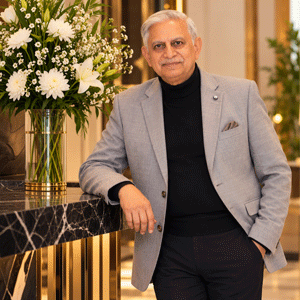
That conviction underpins Zinc Project Consultant, founded in 2015 by Er. Rajendra Kumar Singhvi, a metallurgical engineer with more than four decades in the industry, 34 of them at Hindustan Zinc. His career has run from operating roasters, leaching & purification circuits, and tank houses followed with melting & casting to leading major zinc projects from concept through commissioning, with assignments in nickel, lead, and zinc across India and overseas. Today he supports clients in planning, due diligence, technology selection, equipment sourcing, engineering review, environmental clearances, site supervision and commissioning.
Learning the Plant Before Designing One
Er. Rajendra Kumar Singhvi's journey began in 1978 with a metallurgy degree from MNIT Jaipur, followed by a stint at Alcobex in Jodhpur. In 1981, he joined Hindustan Zinc, then a Government of India enterprise, and worked through roasting, leaching, tank house, melting and casting, zinc dust, and production planning. Few engineers see a plant from so many angles.
The grounding shaped everything that followed. In 1998, he moved to a nickel extraction project, Bhubaneswar based on Sukinda Valley ore, helping establish a 10-tonnes-per-day technology proving plant. The work yielded a patent for recovering nickel from low-grade chromite overburden. After Hindustan Zinc transitioned to Vedanta, he turned to zinc projects, helping establish major plants of 170,000, 210,000 and 250,000 tonnes per year, and later worked with Radi Logam in Indonesia and Vedanta Zinc International's Skorpion Zinc project in Namibia.
The move from operations to projects was less a change of career than a change of vantage point. “For 17 years, I was in the operation of the plant. Then I moved to the project of the same plant. Although the capacity was different, the process technology remained the same”, shares Rajendra Kumar Singhvi, Founder, Zinc Projects Consultant.
During the execution of Zinc Projects, Rajendra Kumar Singhvi was supported by a mix of experienced executives, say 30 percent, but the remainder were Gen - Z of that period who directly joined the project after passing degree from engineering colleges. They all are now managing large projects or holding respective positions.
Since retiring from Hindustan Zinc in 2014 and founding his consultancy, he has supported projects from small plants to large industrial facilities across India, Indonesia, South Africa, Iran and Turkey.
Managing the Interfaces
Zinc Project Consultant's remit spans the full lifecycle: concept and feasibility, engineering, procurement, site execution and commissioning. It also undertakes project and operating cost estimation, proposal reviews, process and safety audits, environmental-clearance support, inspection and expediting, so that technical judgement is applied at every stage of delivery.
The real work, however, lies at the interfaces. A greenfield plant brings together engineering disciplines, equipment suppliers, contractors and site teams, and a delay in one quickly travels to the rest. Equipment that arrives before its foundations are complete wastes time and money; equipment that arrives late holds up commissioning. Singhvi's experience lets him spot such collisions on the planning table rather than at the site.
“The project is like a chain. If any link is weak, the total project will fail. So we have to ensure that the total chain is sufficient and has good strength.
All the equipment has to be the best so that the project gets commissioned well in time”, says Rajendra.
Technology and vendor selection follow the same logic. The consultancy has worked with international providers including Outotec and supported projects involving suppliers from Germany, Spain, Finland, Canada and other markets, always linking technical choices to project economics, schedules and equipment performance. The aim is a plant that is not merely commissioned but commercially sound: technology that earns its place on the balance sheet as well as in the flowsheet.
Designing for Life After Commissioning
Singhvi's sharpest advantage is not something a drawing office can teach. Having spent years inside individual plant sections, he carried their frustrations into project engineering.
“When I was in the operation of the plant, I used to know what the challenges and what the difficulties every section was facing. So I ensured that during the engineering phase itself, all those challenges were being overcome. So nothing has come in the way of the project commissioning”, further adds Rajendra.
The evidence is longevity. A zinc project completed in 2004 still runs at roughly 120 percent of its designed capacity, he says. That record, more than any brochure claim, is the measure of design done with the operator in mind. His career has also tracked the industry's shift from largely manual plants to highly automated, remotely operated facilities, giving him fluency in both worlds.
Cost is handled with the same balance. Technical teams define the equipment and specifications that performance demands; commercial and finance teams then negotiate to secure them at the best viable price. Environmental performance is treated as engineering, not an afterthought. His work spans clearances and systems for managing air, liquid and solid emissions, including technologies that stabilise waste streams and prevent harmful leaching, in line with internationally established practice.
Knowledge Beyond the Project Site
Today the consultancy's clients include L&T ECC, Limpact International in Canada, Kamwest in Finland and Bafesa in Spain, alongside smaller technical assignments and due-diligence engagements. The model is lean by design: direct expertise rather than a large organisation, with most work done remotely and site visits made when a project demands his presence. Er. Rajendra Kumar is also empaneled with Infollion, GLB, Deloitte and more.
Singhvi's contribution extends beyond consultancy. Through Arham Academy, a unit of Singhvi Research Academy & Charitable Society, he works to link vocational training with employment and self-employment for young people, including women. Over the past six to eight years, he says, the initiative has trained roughly 3,000–4,000 students and helped them find jobs. Zinc Project Consultant's remit spans the full lifecycle: concept and feasibility, engineering, procurement, site execution and commissioning
At 70, he shows no sign of slowing. He is already deep into a fourth zinc project, targeted for completion as per plan, and treats continued work as a discipline of the mind: an active brain keeps the body active. What he asks of every project is the same rigour he applies to himself.
“Project is a challenge. You should not keep the job pending for the next day or the next month or next year. Whatever job has to be done, it has to be done right on time. The main thing about the project is, every job has to be done as per the schedule, as per the timeline given”, concludes Rajendra.
It is a fitting summation of a career spent learning how plants are designed, built, commissioned and run, and of a consultancy that uses that knowledge to help the next project get it right from the start.
What Differentiates Zinc Projects Consultant
Er. Rajendra Kumar Singhvi pairs 17 years of hands-on plant operations with decades of major project development, so every design decision is tested against both engineering requirements and the operating realities that follow once construction ends.
His portfolio stretches from small technology-proving and secondary-material facilities to large zinc, lead, and nickel plants involving substantial capital investment, giving clients a consultant equally at ease with modest budgets and major commitments.
Long-standing work with global technology and equipment suppliers gives clients access to established process expertise and international project experience when they evaluate technologies and critical equipment.
Through Arham Academy, Singhvi also invests in employable skills for young people, connecting his industrial experience with a wider commitment to education and workforce development.



We use cookies to ensure you get the best experience on our website. Read more...