
As the industry becomes more electrified, automated and data-driven, the infrastructure supporting machines and systems is becoming as important as the technologies they enable. Industrial customers increasingly need solutions that can protect critical equipment, simplify engineering, improve energy efficiency and scale with changing requirements.
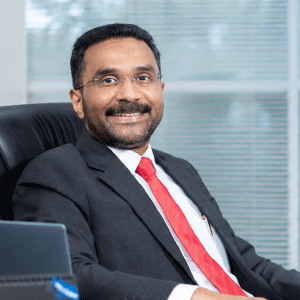
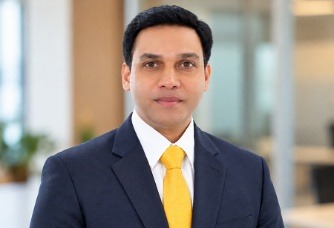
Against this backdrop, Rittal India is entering its next phase under Mathew Jacob, Chief Executive Officer, who assumed leadership of the organisation in June 2026.
With more than three decades of B2B experience and over eight years at Rittal India, Jacob brings together engineering expertise, commercial leadership and a deep understanding of the company’s customers. His mandate is not simply to accelerate growth, but to make Rittal India more agile, customer-centric and future-ready while building on a foundation established over more than three decades in the country.
Rittal’s evolution reflects that broader industrial transition. From standardised enclosures, the company has developed an integrated portfolio spanning power distribution, climate control, IT infrastructure, automation, software and services. In India, its journey since 1994 has similarly moved from manufacturing and supplying products towards creating connected infrastructure that helps customers engineer, operate and scale their industrial environments more efficiently.
Engineering the System, Not Just the Enclosure
Rittal’s strongest differentiator lies in treating industrial infrastructure as a system rather than a collection of products. Its enclosure platforms, power distribution solutions, climate control technologies, IT infrastructure and software are designed to work together, giving customers a common architecture across applications. This systems approach is supported by Rittal’s engineering and solutioning capabilities, including its Centres of Competence, which bring specialist expertise to the design and configuration of application-specific solutions.
“What differentiates Rittal isn’t any single product. It’s the system, and the engineering philosophy behind that system,” says Mathew Jacob, CEO, Rittal.
That philosophy is rooted in German engineering: precision, standardisation, rigorous quality and continuous improvement. It also explains the company’s emphasis on modularity. Platforms such as TS 8 and VX25 allow customers to configure infrastructure for widely differing applications while retaining the benefits of standardised engineering, repeatability and scalability.
The requirement varies sharply across industries. Automotive facilities, rail applications, energy infrastructure, food and beverage plants, process industries and data centres each impose different demands on protection, thermal management, accessibility and reliability. Rittal responds by combining standardised platforms with application-specific configurations and specialist solution engineering rather than creating fragmented solutions for every use case.
Manufacturing discipline reinforces that proposition. Rittal India’s local capabilities include automated surface-treatment processes designed to deliver consistent corrosion protection and finish quality, alongside large-scale enclosure production. Certification and testing further strengthen the reliability of systems deployed in demanding environments.
But engineering value does not end at installation. Lifecycle service, preventive maintenance, technical support, and genuine spare parts extend the relationship beyond the initial project, reflecting a fundamental understanding of industrial infrastructure: its real value is measured by how reliably it performs over time.
Towards a Deeper India Value Chain
Rittal's three-decade India journey is significant precisely because the company has continued to deepen what it does locally. Its India operations have progressively incorporated manufacturing, warehousing, engineering, training and modification capabilities, creating a broader value chain closer to customers.
The evolution has included becoming a production base for small and large enclosures made from carbon steel and stainless steel, serving Asian markets since 2013, and establishing its first training centre outside Germany in India in 2014.
Today, the organisation combines manufacturing with five modification centres, more than 120 channel partners, around 80 partner warehouses and more than 40 system integrators. In addition, Rittal India has established expertise in designing and manufacturing enclosures for hazardous applications (ATEX-certified solutions).
This expanding ecosystem gives Rittal greater proximity to India's diverse industrial landscape. Customers do not operate from a single template: a global automotive manufacturer, a domestic process plant, a data centre and an infrastructure project may all require different levels of configuration, integration and local support.
“Our growing modification and distribution capabilities allow standardised systems to be adapted closer to the point of application. We are strengthening our presence across emerging industrial corridors while building capabilities that allow engineering and modification to happen closer to customers,” adds Mathew.
For Mathew, who has spent more than eight years with Rittal India and previously led Sales & Marketing, the next phase is centred on combining that local market understanding with Rittal's global technology platform. His experience across Rittal, Schneider Electric, Larsen & Toubro and Standard Batteries gives him a perspective shaped by both engineering and commercial leadership.
Connecting Engineering with the Digital Thread
Rittal’s relationship with Eplan is central to its digital thread ecosystem that links engineering, configuration, manufacturing and operation, aligned with the rising need for physical infrastructure and industrial systems to connect. Tools such as RiPanel and RiPower support engineering and configuration, while digital product data, 3D models bills of materials and plausibility checks help customers move more efficiently from design to production. Rittal Automation Systems extends this approach into automated enclosure processing, reducing manual intervention and improving repeatability.
The same engineering approach extends into power distribution and climate control. Beyond supplying system components, Rittal brings design and solutioning capabilities through its Centres of Competence, enabling specialist support for complex power-distribution requirements. Its portfolio includes switchgear solutions based on IEC 61439 and IEC 61641-tested, neutral-tested panel solutions, strengthening the focus on safety, reliability and performance across demanding electrical applications.
RiLineX introduces a modular, manufacturer-neutral and licence-free platform built around a click-based installation concept. The system can reduce engineering time by up to 30 percent and assembly time by up to 50 percent, while supporting applications up to 1,000V AC and 1,500V DC. This enables faster deployment without compromising engineering precision.
Rittal’s digital capabilities also extend into IT infrastructure, where its offering extends well beyond conventional racks. Supported by its design and solutioning expertise through Centres of Competence, the company addresses the broader infrastructure requirements of increasingly complex data-centre environments. Alongside RiMatrix S, TS IT and Edge data-centre solutions, its portfolio encompasses Direct Liquid Cooling (DLC), OCP racks designed for DC power environments, Remote Power Panel (RPP) solutions and electrical panels. Together, these capabilities enable Rittal to address power, cooling, enclosure and infrastructure requirements as part of a more integrated data-centre ecosystem.
Building the Infrastructure India Will Need Next
India’s industrial transformation is creating a convergence of requirements that once existed in separate domains. Electrification is increasing power-distribution demands. Automation is raising the importance of reliable control infrastructure. Data-driven manufacturing is making connectivity essential. Rittal is positioning its India business at that intersection combining products, engineering expertise and solutioning capabilities to help customers address increasingly complex infrastructure requirements. Rittal's three-decade India journey is significant precisely because the company has continued to deepen what it does locally
Four strategic priorities for Rittal market reach, digitalisation, sustainable innovation, and people and capabilities reflect the broader direction of the organisation. Expansion across industrial corridors will be accompanied by stronger local modification and distribution capabilities. Digitalisation will deepen through the connected engineering environment spanning Rittal and Eplan. Sustainable innovation will continue through technologies such as Blue e+ Cooling and RiLineX. And investment in people will remain critical as engineering requirements become more specialised.
The sustainability agenda is also increasingly connected to engineering efficiency. Blue e+S cooling technology is designed to improve energy efficiency, while RiLineX’s modular architecture can reduce material waste. The next stage of Rittal India’s development will be shaped not only by products, but by how effectively it can combine global technology with Indian engineering, manufacturing and customer insight.
“Our future strategy is built around market reach, digitalisation, sustainable innovation, and people and capabilities,” concludes Mathew.
Under Mathew's leadership, Rittal’s next chapter is about making that platform more agile and future-ready, strengthening its ability to help Indian industries build infrastructure that is not only engineered for today's requirements, but capable of adapting to what comes next.
The Rittal India Advantage
Three decades of expertise in india: from its 1994 doddaballapur beginnings to a nationwide network spanning manufacturing, offices, warehouses and modification centres.
One integrated platform: enclosures, power distribution, climate control, automation, it infrastructure and software working as one engineering ecosystem.
Engineering meets digitalisation: rittal and eplan connect configuration, cad, bom, manufacturing and automation to streamline the journey from design to production.
Built for india's next phase: local manufacturing, modification capabilities, digital infrastructure and sustainable technologies positioned to support india’s accelerating industrial and it transformation.


We use cookies to ensure you get the best experience on our website. Read more...


