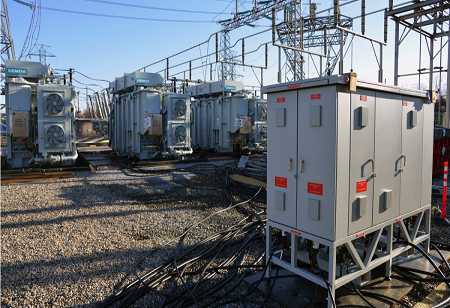
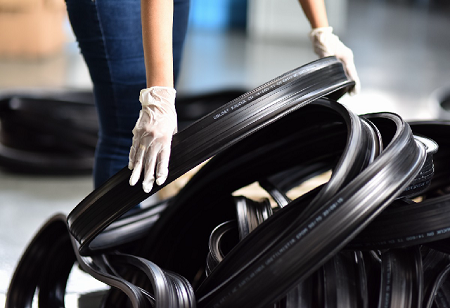
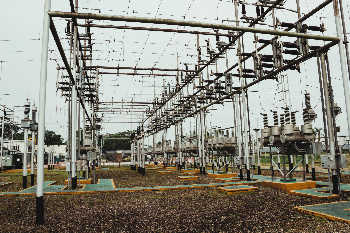
 The scheme’s hardware list is long: power and distribution transformers, high-voltage switchgear and circuit breakers, towers and conductors, cables and substation equipment, safety equipment, control and monitoring systems.
Domestic capacity with respect to the demand is growing. Siemens Energy India approved Rs 2,060 crore for a factory adding about 30,000 MVA. Transformers and Rectifiers (India) Ltd. is expanding towards 75,000 MVA of annual capacity, and Power Grid has awarded 765 kV transformer packages to CG Power and BHEL.
Figures given to Parliament in March 2026 by the Ministry of Power put delivery at 11-15 months for 220 kV transformers, about 15 months for 400 kV, and 20-24 months for 765 kV.
India added 113,013 MVA of transformation capacity in FY26, about 90 percent of the CEA target. Against national capacity of roughly 1,480 GVA that must rise towards 2,345 GVA, there is little slack.
Grid-enhancing technologies such as Dynamic Line Rating, Flexible AC Transmission Systems and STATCOM units can buy time.
Dynamic Line Rating raises how much current existing lines carry based on real-time weather. Flexible AC Transmission Systems and STATCOM units manage power flows and voltage.
Digital substations, advanced monitoring and AI-based renewable forecasting help operators schedule closer to the limit.
These matter because voltage oscillations and stability limits in Rajasthan’s renewable complexes reportedly cut usable transmission margins below design capacity.
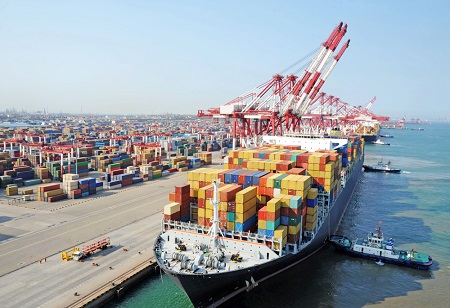
None of this removes supply-chain dependence, since some components and specialized materials are likely to still be imported and high-voltage testing capacity is finite.
The core risk is the gap between investment and grid readiness: sanctioned money does not become evacuation capacity until land is cleared, equipment arrives, lines are energized and the operators can use them.
The scheme’s timeline runs to FY2032-33, which leaves room to learn, but only if each phase reports completed circuit kilometers and commissioned megawatt-hours rather than packages tendered.
Tracking energized capacity against renewable capacity connected, state by state, would show quickly whether the corridor is keeping pace with generation.
Funding looks the most solvable part: the Centre covers a third of transmission costs and bidding draws private capital. Execution is weaker, given late earlier phases, equipment lead times of up to two years and minimal domestic cell output.
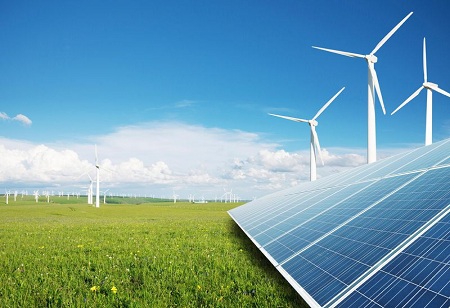
By FY2032-33, Green Energy Corridor Phase 3 will probably deliver in states with strong implementation and lag elsewhere. Success depends on transmission preceding generation, and on storage arriving with domestic supply behind it.
Dennis M is a Correspondent at The Industry Outlook, covering developments across India’s manufacturing landscape. His primary areas of focus include manufacturing equipment and machinery, along with industrial services and solutions supporting manufacturing operations. His work examines industry trends, technology adoption, investments and developments shaping the manufacturing ecosystem.







We use cookies to ensure you get the best experience on our website. Read more...