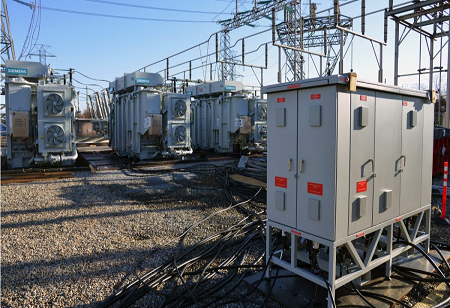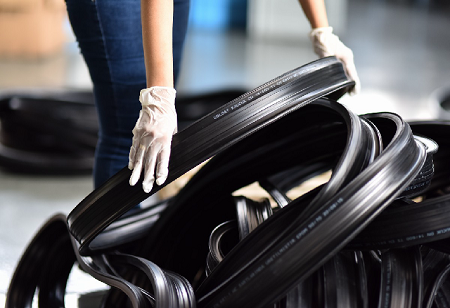
Walk through any industrial facility and the massive equipment tends to get all the attention. Giant pumps, sprawling pipelines, engines the size of a small car. It's easy to assume the strength of an operation comes down to these big, obvious pieces of machinery doing the heavy lifting.
But ask anyone who's actually dealt with equipment failure, and a very different story starts to emerge. More often than not, the piece that caused the whole shutdown wasn't some massive component at all. It was something small enough to hold in one hand, sitting quietly between two surfaces, doing a job nobody thinks about until it stops doing it properly.
That gap between size and importance is exactly what makes this particular part so easy to overlook and so critical at the same time. It's also why choosing the right gasket manufacturer ends up mattering a lot more than most people expect going into a project.
What a Gasket Is Really Doing
At its core, a gasket exists to create a seal between two surfaces that need to stay tightly joined. Bolt two metal flanges together and there's still going to be tiny imperfections between them, gaps too small to see but plenty big enough for liquid or gas to escape through over time.
A gasket fills that gap, compressing into the microscopic irregularities on each surface to form a barrier that holds under pressure. That barrier keeps fluids, gases, chemicals, or pressure exactly where they're supposed to stay instead of leaking out somewhere they shouldn't. It sounds simple described this way, but the actual engineering behind getting that seal right is anything but basic.
When a Tiny Seal Becomes a Big Problem
A gasket that fails doesn't usually announce itself with a dramatic explosion. More often it starts small, a slow drip, a faint smell, a pressure reading that's slightly off from where it should be. By the time anyone notices, the damage is often already spreading well beyond that one small component.
Leaks lead to downtime, and downtime on industrial equipment gets expensive fast. Surrounding parts can suffer damage from exposure to whatever the gasket was supposed to be containing. In more serious cases, a failed seal introduces real safety risks, especially in equipment dealing with high pressure or hazardous materials. What started as a tiny piece of rubber or composite material ends up responsible for a very costly, very avoidable mess.
Why Material Selection Matters
Not every gasket can handle every job, no matter how well made it is. Temperature plays a massive role here, since a material that performs beautifully at room temperature might break down entirely under sustained heat or extreme cold. Pressure adds another layer of complexity, requiring materials engineered to hold their shape and seal integrity under serious force.
Chemical exposure narrows the options further still, since certain materials degrade rapidly when exposed to specific solvents, fuels, or acids. Environmental conditions, humidity, vibration, outdoor exposure, all factor into the equation too. Getting material selection wrong doesn't just shorten a gasket's lifespan, it practically guarantees an early failure regardless of how well everything else was built.
Precision Matters More Than Size
Because gaskets are small, it's tempting to assume manufacturing them is a fairly simple process. In reality, the opposite tends to be true. Dimensional accuracy has to be exact, since even a slight deviation can prevent a proper seal from forming in the first place, no matter how good the material is.
Manufacturing tolerances matter just as much, particularly for equipment operating under demanding pressure or temperature conditions where there's zero margin for error. Material quality has to remain consistent across every single unit produced, since one weak batch can undermine an otherwise reliable design. Precision isn't a nice extra here, it's really the entire foundation the rest of the gasket's performance is built on.
Conclusion
It's easy to overlook something as small as a gasket when there's massive, complicated machinery sitting right next to it. But that small component is frequently the thing standing between smooth operation and a very expensive shutdown, holding pressure, containing materials, and keeping everything sealed exactly where it needs to be.
Recognizing just how much rides on getting this small part right changes how seriously it deserves to be treated during equipment design and maintenance. Sometimes the biggest risks to an operation come from the smallest places, and a properly engineered seal is often the difference between reliable performance and a very avoidable failure.
.jpg "Saksham Enterprises: Optimizing Mission- Critical HVAC Infrastructure For The High Precision Sector")

.jpg "JDS Group of Companies: Innovating Smart Solutions For Modern Power Transmission & Distribution Infrastructure")




We use cookies to ensure you get the best experience on our website. Read more...