India’s dairy sector is uniquely characterized by millions of smallholder farmers supplying small volumes of milk to dairy cooperatives. While this structure ensures equitable distribution of resources, it also presents a fragmented challenge in waste management. NDDB Mrida Ltd, a subsidiary of National Dairy Development Board (NDDB) recognized that cattle manure often viewed as an environmental burden holds the potential to fuel a localized circular economy.
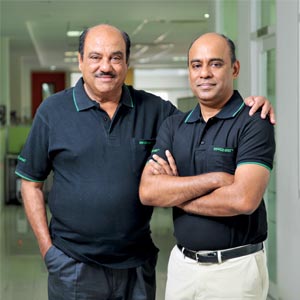
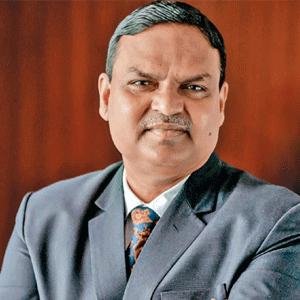
Dr Meenesh Shah, Chairman, NDDB & NDDB Mrida Ltd mentioned that since inception, the mission has been to unlock this untapped resource, transforming it into clean energy, viable agricultural inputs and tangible economic benefit for farmers. Building a truly sustainable dairy and agricultural sector requires more than capital - it demands collaborative ecosystems. “By weaving together technological innovation, strategic investments and deep cooperative networks, we can ensure that the transition to green energy directly enriches the farmers who form foundation of our economy”, speaks Dr Meenesh Shah.
The Mrida Journey: Scaling Manure Value Chain
Established in July 2022 as a wholly-owned subsidiary of the National Dairy Development Board (NDDB), Mrida was founded with a clear mandate: to establish a commercially sustainable, end-to-end Biogas and Manure Value Chain. “We started by tackling the immediate energy needs of rural households and quickly expanded our vision to address macro-level decarbonization”, says Dr Meenesh Shah, Chairman.
A significant milestone in the journey was the strategic joint venture formed with Suzuki R&D Center India (SRDI) in March 2025, when SRDI acquired 26 percent stake in the Company. The partnership has been formed with a common objective of establishing and operating bio gas plants across the country using cattle dung as the resource for energy production and thereby contributing towards additional income to small farmers and to the environment and carbon neutrality.
Driving Innovation: From Farm to Fuel to Fertilizer
Innovation at Mrida is about implementing solutions that fit the exact context of the Indian agrarian landscape. Modular Biogas Infrastructure: To accelerate adoption across rural households, Mrida has focused on the large-scale implementation of ‘plug-and-play’ household biogas plants.
For other applications such as cattle shed/Gaushala etc., the company offers standardized, modular designs which allows for faster installation, reliable operations and consistent gas yields.
Biogas as Alternate Energy Source: The Company has developed processes and mechanism to collect cattle dung/slurry from rural households and transfer it to the processing centres at Varanasi, Uttar Pradesh and Vasna, Gujarat. Both the facilities at Varanasi and Vasna have been set up with 100 percent financial grant and technical support from NDDB.
About 65-70 MT of cattle dung/slurry has been collected every day for the last three years within a radius of 25 Kms from the plant. An amount of above Rs 150 Lakhs has also been disbursed to the farmers towards procurement of dung every year since inception. The cattle dung received at the Varanasi facility is tested and then taken for processing into the anaerobic digesters.
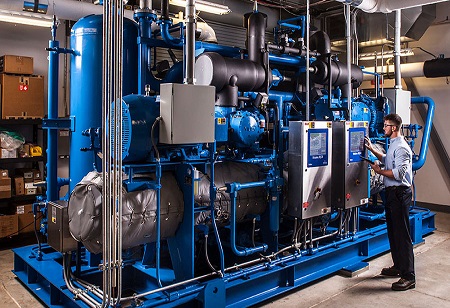
The facility generates about 9 Lakh cubic metres every year since commissioning in 2023, which is used as fuel for the steam boilers in the adjacent dairy plant and also generates 250 kW of electricity. In this period of global uncertainty and volatile energy markets, the biogas plant ensured a reliable and cost-effective fuel supply to the boilers in the Dairy.
SuDhan Agriculture Inputs: The true circularity of a biogas plant lies in its digestate. The Company has developed processes to manufacture value-added organic fertilizers from cattle dung - including Phosphate Rich Organic Manure (PROM), Bio-stimulants such as “Rootguard”, “GroMax”, and Micronutrient Rich Liquids (MRL). These are marketed under the brand name SuDhan and has been well accepted by the farmers.
Application Technology: To ensure these bio-inputs are utilized effectively, specialized slurry applicators were developed that allow for the immediate, emission-free incorporation of liquid fertilizer directly into the subsoil, optimizing soil health and crop yields. Mrida was founded with a clear mandate: to establish a commercially sustainable, end-to-end Biogas and Manure Value Chain
Carbon Credit Aggregation: Through initiatives like the "Gobar Se Samriddhi" program, the Company has successfully developed models that allow small dairy farmers to monetize their sustainable practices and access global carbon financing, effectively reducing the upfront costs of biogas plants.
Emerging Trends in Sector:
As the renewable energy landscape matures, the biogas sector must transition from isolated, grant-dependent projects to commercially robust enterprises. Some of the key trends expected from the Industry are: Standardized Industrial O&M: As large-scale Compressed Biogas (CBG) plants become more prevalent under schemes like SATAT, the focus would shift from mere construction to Operations and Maintenance. Standardizing O&M protocols and addressing technical bottlenecks such as structural integrity and digestate management at scale are imperative for long-term profitability and consistent energy output.
Integration with Corporate ESG Frameworks: Corporate sustainability is rapidly evolving from basic compliance to mandatory strategic alignment. Frameworks like the Science-Based Targets initiative (SBTi) and the concept of double materiality are compelling industries to aggressively mitigate their Scope 3 emissions. The decentralized CBG projects and organic fertilizer initiatives offer corporations a direct, measurable pathway to decarbonize their supply chains, making agricultural waste-to-energy projects a cornerstone of future corporate ESG strategies.


We use cookies to ensure you get the best experience on our website. Read more...