
Across sectors such as chemicals, distilleries, food processing, sugar, and wastewater treatment, industrial players are actively seeking solutions that can reduce steam consumption, lower operating costs, and minimise environmental impact.
This shift has significantly increased the relevance of advanced Falling Film Evaporators, Mechanical Vapour Recompression (MVR) systems, and heat recovery technologies that enable circular energy utilisation within industrial processes.
Within this evolving landscape, Liqui Vapour Technologies has emerged as a specialised engineering company focused on delivering sustainable evaporation and concentration solutions for modern industries.
Positioned at the intersection of process innovation and energy optimisation, the company is steadily building its presence through low Delta T evaporation systems, advanced heat recovery integration, and future-ready process engineering.
By focusing on technologies that support boiler reduction, steam recycling, and process electrification, Liqui Vapour Technologies is contributing to the industry’s larger transition toward low-carbon manufacturing operations.
Its approach combines customised engineering, process simulation expertise, and in-house manufacturing capabilities to deliver highly efficient systems designed for long-term industrial sustainability.
Advancing Energy-Efficient Evaporation Technologies
Founded in 2020, Liqui Vapour Technologies began as a consultancy-driven organisation specialising in evaporation and distillation systems before transitioning into a full-fledged EPC company. Since then, the company has steadily expanded its engineering and manufacturing capabilities, establishing dedicated workshops in Mumbai and Pune for the fabrication of advanced process equipment using exotic metallurgy such as titanium, nickel, and zirconium.
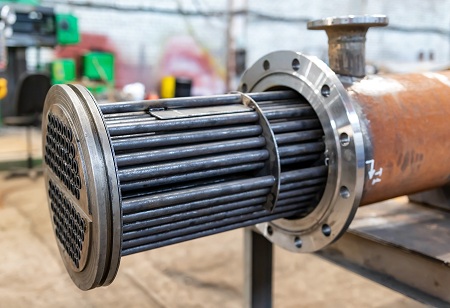
The company’s core strength lies in designing high-efficiency evaporation systems capable of operating with extremely low temperature differences. Its Falling Film Evaporators are engineered to function at Delta T values as low as 1–2°C, a capability that significantly reduces energy demand and improves overall thermal efficiency. This low Delta T design philosophy enables seamless integration with Mechanical Vapour Recompression systems and industrial heat pumps, allowing industries to recycle steam within the same process rather than depending heavily on conventional boilers.
Liqui Vapour Technologies manufactures a comprehensive range of evaporation and concentration equipment, including Falling Film Evaporators, Forced Circulation Evaporators, Rising Film Evaporators, Agitated Thin Film Evaporators, crystallisation systems, and MVR-based heat recovery solutions. “By focusing on process sustainability rather than standalone equipment supply, we aim to help industries reduce fossil fuel dependency while improving operational economics”, adds Mukesh Gupta, Founder.
The company’s core strength lies in designing high-efficiency evaporation systems capable of operating with extremely low temperature differences
Driving Decarbonisation through Process Innovation
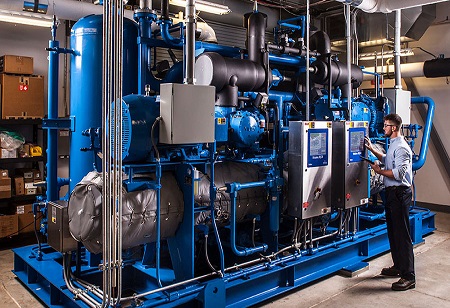
The company’s engineering philosophy is strongly aligned with the concept of circular steam economy, where waste heat and vapours are continuously recovered and reused within the process. Through the integration of Falling Film Evaporators with MVR technology and heat pumps, the company enables clients to significantly lower steam consumption while simultaneously reducing water usage and CO2 emissions.
Beyond energy savings, the company’s systems are also designed to maintain operational efficiency under varying plant loads. Unlike conventional evaporation systems that often struggle during reduced capacity operations, Liqui Vapour’s evaporators are engineered for stable performance even under fluctuating process conditions. This operational flexibility has positioned the company as a reliable engineering partner for industries looking to modernise their concentration and heat recovery infrastructure.




We use cookies to ensure you get the best experience on our website. Read more...